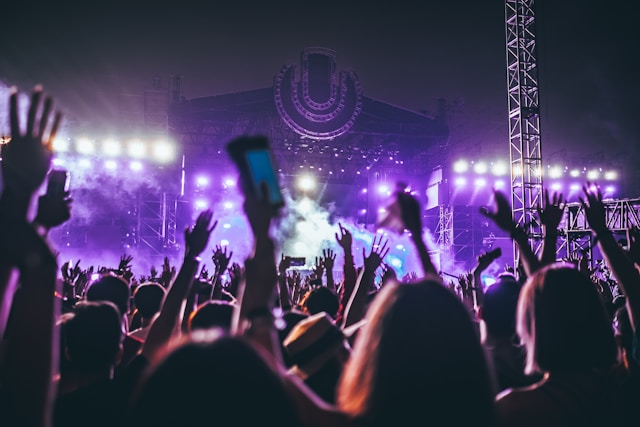
There are experiences that stop time. A crowd going quiet the moment a performer hits a note nobody expected. The instant before a fireworks sequence detonates. The particular silence that settles over a field when 10,000 people are collectively holding their breath. Festival people know that feeling well. It’s the reason they keep going back.
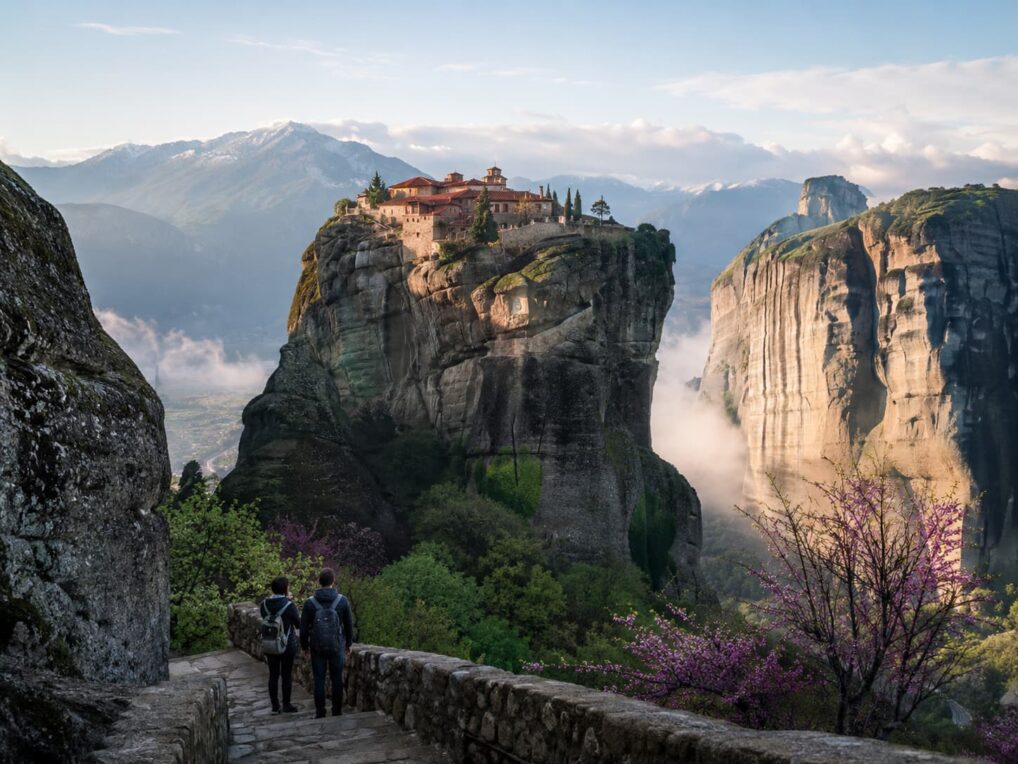
Meteora, in central Greece, produces the same feeling. Not because of music or performance, but because the landscape itself is operating at a frequency that demands your full attention. Byzantine monasteries sit on top of sheer sandstone pillars that rise 400 metres from the plain of Thessaly. The rock formations are so improbable, so far outside ordinary visual experience, that your brain takes a moment to accept what it’s actually looking at. That’s not a tourist brochure description. It’s a genuine perceptual event.
For anyone who travels to chase experiences rather than destinations, Meteora belongs near the top of the list. Here’s why.
1. The Scale Hits You the Same Way a Festival Stage Does
You don’t fully grasp the Meteora rock formations from photographs. The pillars look dramatic in images, sure, but the spatial relationship between the stone columns, the sky, the valley floor, and the monasteries balanced on top doesn’t translate to two dimensions. You have to be standing in it.
The first time you turn a corner on the road from Kalambaka and the formations come into full view, the effect is something like walking out of a tunnel into a main stage at night when the lights are on. The scale recalibrates everything. What felt large a moment ago suddenly doesn’t. The brain resets its reference points. Festival regulars know this moment, it happens at the threshold of every great venue. Meteora delivers it without any human engineering at all, which somehow makes it hit harder.
2. The Monasteries Are Active, Living Places
There are six monasteries still operating at Meteora, out of an original twenty-four that were established between the 14th and 16th centuries. The largest, the Great Meteoron, was founded around 1340. These are not museums. Monks and nuns live and work in them, following daily religious schedules that have been largely unchanged for centuries.
Visiting an active monastery is a different experience from visiting a heritage site. The bells are real bells rung at real times for real reasons. The incense is burned as part of actual liturgy, not as atmosphere. The icons in the chapels are objects of genuine veneration, not display pieces. For travelers who spend their year going to carefully curated live events, there’s something grounding about encountering a community that has been running the same program continuously for 700 years without a single production meeting.
3. The Sunrise and Sunset Views Are Events in Their Own Right
Festival people understand the importance of timing. The set you fight for is rarely the headline at 11pm. Sometimes it’s the one at 6am when the crowd has thinned and the light is doing something that won’t happen again. Meteora rewards that same instinct for being in the right place at the right time.
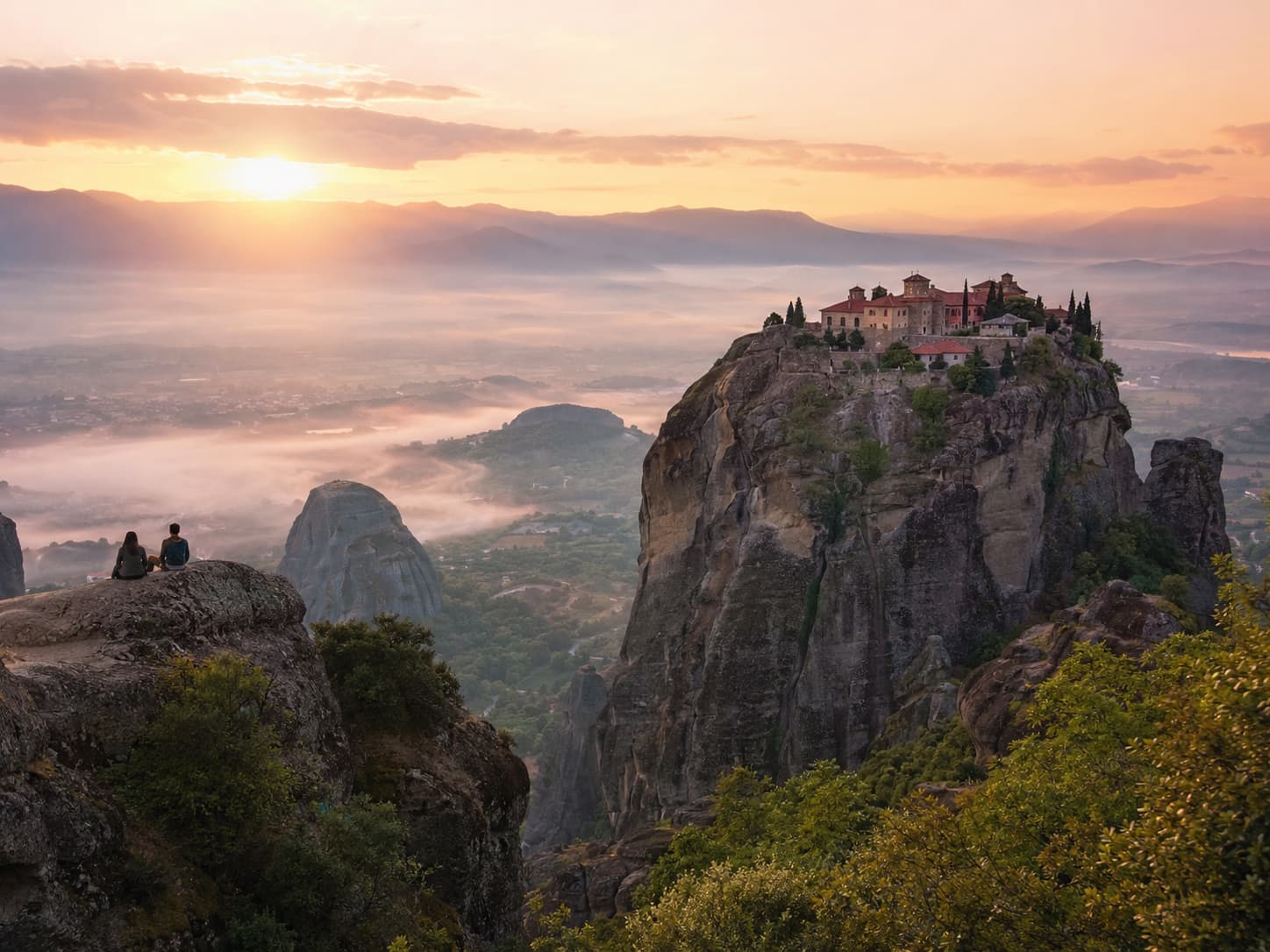
Sunrise from the Roussanou Monastery viewpoint, when mist is still sitting in the valley and the rock pillars are catching the first horizontal light, is one of those experiences that travelers describe in the specific, careful language people use when they’re trying to convey something that resisted easy description. Sunset from the Holy Trinity Monastery, looking west across the plain toward the Pindus Mountains, is different again: warmer, slower, the rock going from gold to orange to deep rust as the light falls away. Neither requires a ticket. Both require getting up early or staying late, which is the same basic currency festival life runs on.
4. The Surrounding Town of Kalambaka Is Genuinely Good
A lot of world-class natural destinations are surrounded by serviceable-at-best towns that exist purely to accommodate visitors. Kalambaka, the small city at the base of the Meteora formations, is better than that. It has a functioning local economy, good tavernas that serve the regional cuisine of Thessaly, a covered market, and enough independent character that spending an evening there after the day-trippers have left feels like being in an actual place rather than a tourist processing facility.
The local wine from the Thessaly region is worth trying with dinner. The lamb and goat dishes from the surrounding hill country are good. The coffee culture, as everywhere in Greece, is treated with appropriate seriousness. For festival travelers who know the difference between a festival town that’s just a service node and one that has its own life after the main event ends, Kalambaka is the latter.
5. The Acoustic Environment Is Extraordinary
This is something that doesn’t come up often in travel writing about Meteora, but it’s real. The rock formations create an acoustic environment unlike anything in an ordinary landscape. Sound behaves differently among the pillars. Wind moves through the gaps between columns in ways that produce low tones you feel as much as hear. The bells of the monasteries, ringing at different times from different heights, layer in the valley in a way that’s more composition than cacophony.
For anyone interested in the relationship between sound and space, which festival audiences tend to be, Meteora is a working example of natural acoustic design at a scale no human architect could replicate. We’ve written before about how acoustic soundscapes operate differently from amplified sound, and Meteora is the extreme version of that principle: a landscape that produces its own sonic character without any electronic assistance whatsoever.
6. Guided Tours Unlock the Historical Depth That Makes Everything Richer
The physical drama of Meteora is immediately legible. The historical and spiritual depth behind it takes more work to access. The story of how and why the monasteries were built where they were, the Byzantine political context that made remote mountain hermitages the sensible option, the techniques used to haul building materials up sheer rock faces before fixed ladders existed, none of this is visible from the road.
Operators like Meteora Tours run guided experiences that move through both the geological and monastic history of the site, connecting the physical environment to the human decisions that shaped it over seven centuries. For travelers who want more than the view, a guided visit transforms Meteora from an impressive spectacle into a place with a legible story. The same way knowing an artist’s background changes how you hear their set, knowing Meteora’s history changes what you’re seeing when you stand on the rocks.
7. The Light Changes Everything, Depending on When You Go
Meteora in summer is crowded, bright, and hot. The light is hard and high. The formations are dramatic but the landscape feels exposed. Meteora in spring or autumn is something else entirely. Lower sun angles mean the rock takes on colour more slowly across the day, passing through a wider range before the light flattens at noon. Cloud cover, which is more common outside summer, produces the kind of dramatic chiaroscuro that painters travel for.
Winter visits, which very few tourists make, offer near-empty monasteries, the possibility of snow on the rock formations, and a quality of silence that has no equivalent in the warmer months. For festival travelers who know that the experience of any live event depends enormously on the conditions, the season, the crowd density, the weather, the same logic applies here. Meteora is not a fixed experience. It’s a variable one, and choosing when to go is part of the work.
8. It Produces the Same State That the Best Live Events Do
The reason festival culture has the hold on people that it does isn’t really about the music, or not only about that. It’s about the altered state that comes from being fully present in a remarkable environment alongside other people who are also fully present. That state is harder to access in ordinary life than it should be. Festivals manufacture conditions for it. So do certain travel experiences.
Meteora is one of them. Standing on a rock ledge 300 metres above the plain, with a 14th-century monastery behind you and a horizon that runs to the edge of the visible world, produces a version of that presence that’s its own thing. The same instinct that draws people to immersive festival spaces is the instinct that Meteora satisfies, except the immersive space here took about 60 million years to build and seats considerably more than any festival venue.
You come back different. Not dramatically, not in a way you’d necessarily put into words at the airport. But the reference point shifts. The brain has a new data point for what overwhelming looks like. That tends to matter.
A Final Thought
The Atlin Festival exists because some experiences are worth traveling a long way for. The specific combination of place, community, and moment that a great festival produces is not reproducible at home on a screen. You have to go.
Meteora operates on the same logic. The photographs exist, the documentaries exist, the descriptions exist, and none of them are the thing. The thing is standing at the base of a 400-metre sandstone pillar with a Byzantine monastery on top of it and understanding, at a level below language, that the world is considerably stranger and more various than your daily life usually allows you to feel.
That’s worth the flight to Greece. Go in spring if you can. Stay for the sunset. Get up for the sunrise too.